
SOLUTION
Audit Management
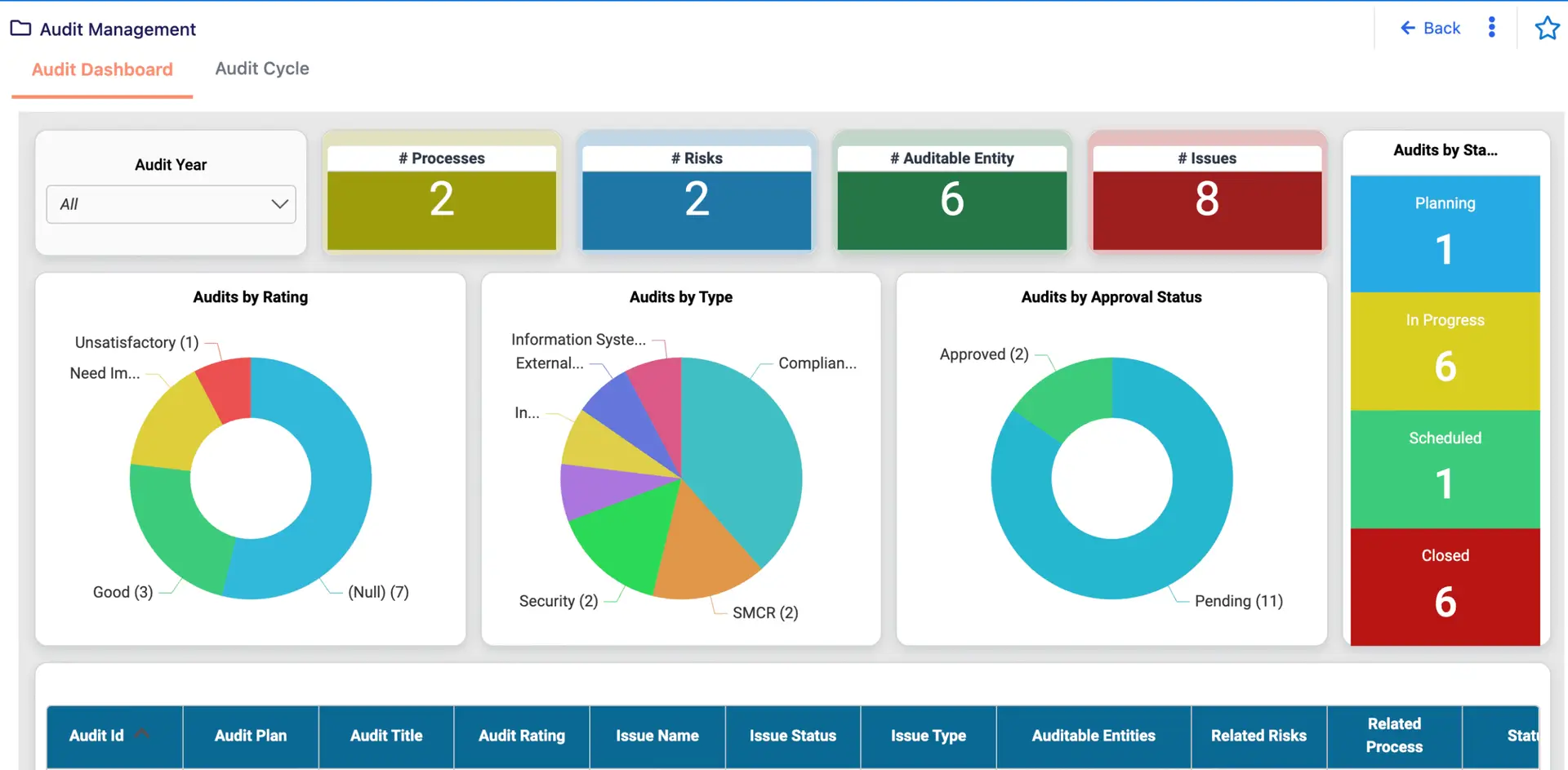
Shorten audit cycles and eliminate manual headaches with automation that streamlines planning, execution, and reporting. What are the main types of audits?
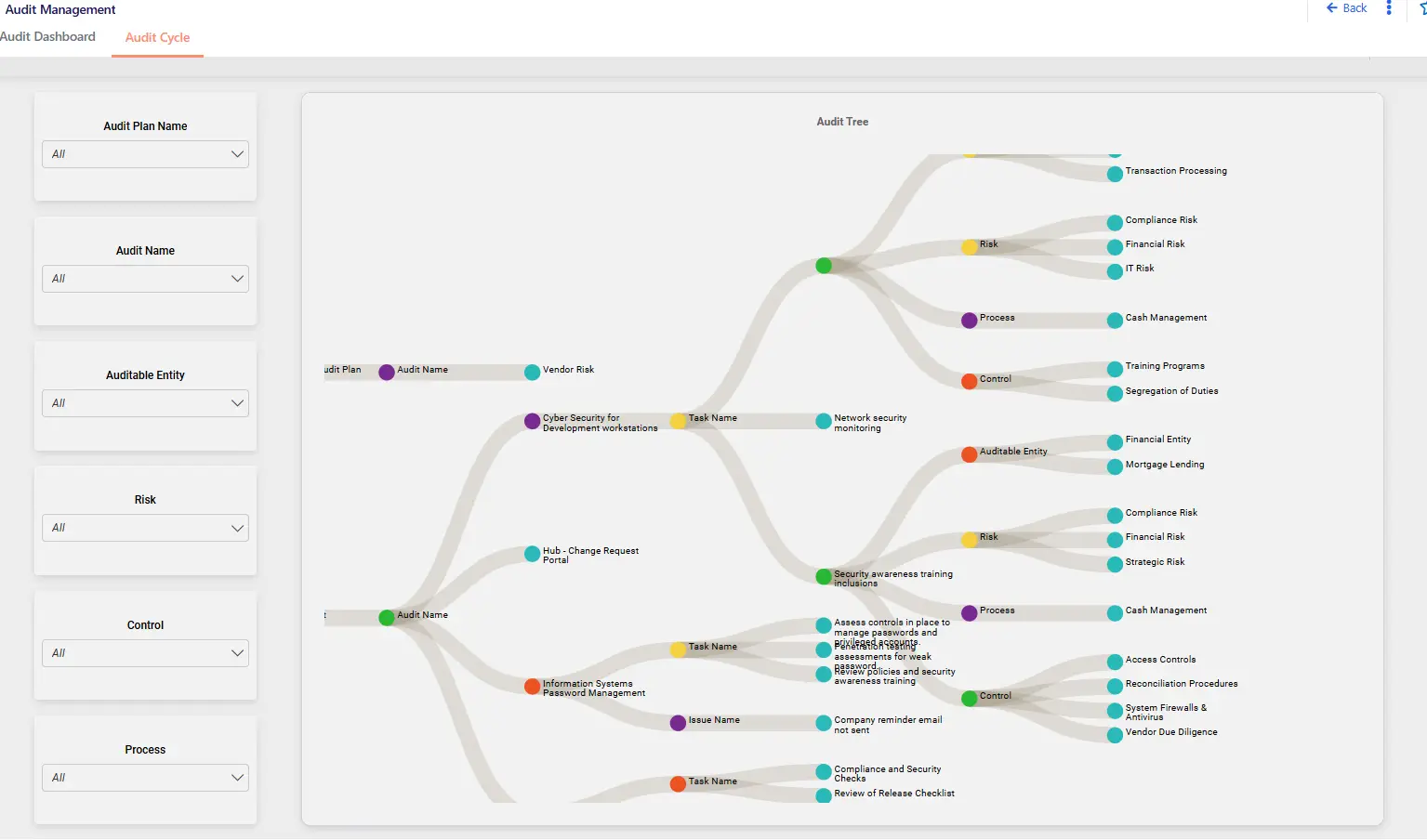
Faster Audits
Most organizations face three broad audit types:
- Internal audits — done by your own staff to improve processes and controls,
- External audits — performed by independent auditors to validate financial statements or compliance,
- Regulatory or government audits — led by authorities to confirm you follow laws and industry standards.
“Our business is global and changes daily. The ability to easily move plans and folders within CLDigital with no coding saves us a ton of time every year.”
Chief Information Officer
- Large Insurance Company (UK)
“CLDigital gave us real-time visibility and control, bringing risk and compliance into one coherent view.”
Chief Risk Officer
- Global Financial Institution (UK)
“We replaced dozens of spreadsheets and legacy systems with one intuitive dashboard with no code required.”
Enterprise Risk Manager
- U.S. Healthcare Organization
What is a management audit, and how is it different from audit management?
A management audit reviews how well leaders plan, organize, and control the business. Audit management is the process and software you use to plan, run, and track any audit—financial, operational, or compliance. In short, a management audit is one kind of engagement, while audit management is the system that supports every audit type.
What are the 5 C’s of audit findings?
The “5 C’s” help auditors write clear findings:
1. Criteria (The “What Should Be”)
This is the benchmark or “yardstick” used to measure the process. Without a clear criterion, a finding is just an auditor’s opinion.
- Details: This includes formal policies, state or federal laws, industry best practices, or specific KPIs.
- Key Question: What is the authoritative standard that the organization agreed to follow?
2. Condition (The “What Is”)
This is the factual evidence of what is currently happening. It describes the gap between reality and the criteria mentioned above.
- Details: This should be supported by data, such as “45% of invoices lacked a manager’s signature” or “The server room door was left propped open during three separate walkthroughs.”
- Key Question: What specific evidence did the audit uncover?
3. Cause (The “Why It Happened”)
This is the most critical (and often the hardest) part to identify. It identifies the root reason for the deviation.
- Details: It’s rarely enough to say “human error.” You have to dig deeper—was it a lack of training, a software glitch, or a lack of resources?
- Key Question: What is the underlying reason the condition exists?
4. Consequence (The “So What?”)
Also known as the Effect, this explains the stakes. Management is much more likely to act if they understand the tangible or intangible cost of the status quo.
- Details: This could be financial loss, a data breach, reputational damage, or legal penalties. It answers why the reader should care about the finding.
- Key Question: What is the risk or negative impact of allowing this to continue?
5. Corrective Action (The “What Now?”)
These are the recommendations provided by the auditor to close the gap and prevent the issue from recurring.
- Details: These actions should be “SMART” (Specific, Measurable, Achievable, Relevant, and Time-bound). They must address the Cause, not just the Condition.
- Key Question: What specific steps must management take to resolve the root cause?
BENEFITS
Faster Audit Prep
Reduce audit prep time by 50% with automation and structured workflows.
End Audit Fatigue
Reduce audit fatigue with centralized evidence and reporting.
Real-Time Visibility
Address findings quickly with real-time visibility.
Simplified Reporting
Demonstrate compliance to regulators and auditors with ease.
FAQ
Solution FAQs
What is Audit Management?
What are the key functionalities of Audit Management?
What are the benefits of Audit Management?
Automated audits shorten cycles, reduce fatigue, and provide clear visibility into findings and remediation progress.
What are the challenges of Audit Management?
GET STARTED
Let's Connect
Discover how our platform can help you achieve better outcomes and you prepare for what’s next in risk and resilience.