
SOLUTION
Crisis Management
Decisive Action
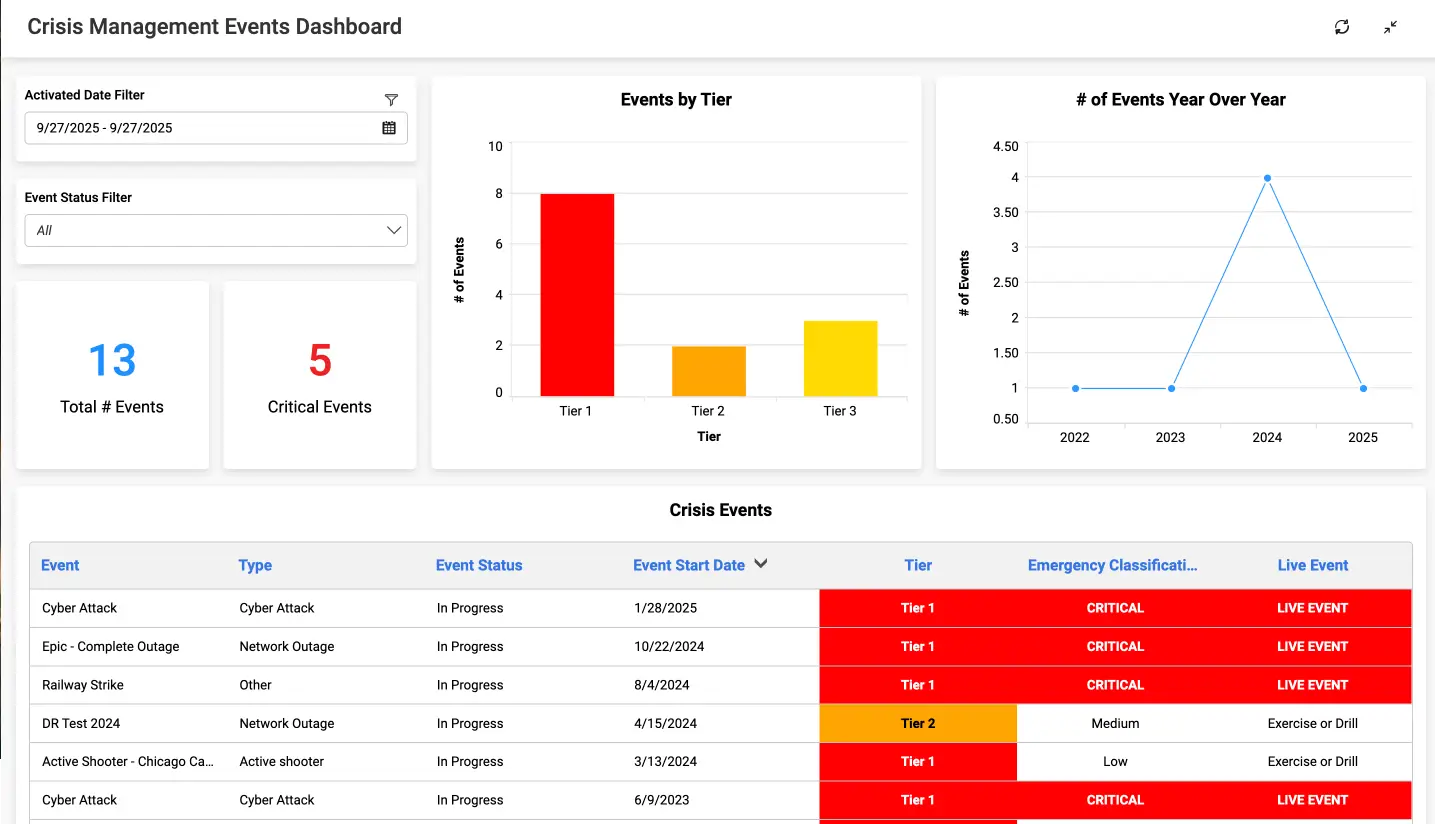
Visualize events and incidents based on tier, criticality, and type.
Capture trend data to understand pattern types over any timeframes.
Manage your program how you want to.
“Our business is global and changes daily. The ability to easily move plans and folders within CLDigital with no coding saves us a ton of time every year.”
Chief Information Officer
- Large Insurance Company (UK)
“CLDigital gave us real-time visibility and control, bringing risk and compliance into one coherent view.”
Chief Risk Officer
- Global Financial Institution (UK)
“We replaced dozens of spreadsheets and legacy systems with one intuitive dashboard with no code required.”
Enterprise Risk Manager
- U.S. Healthcare Organization
Clear Communication
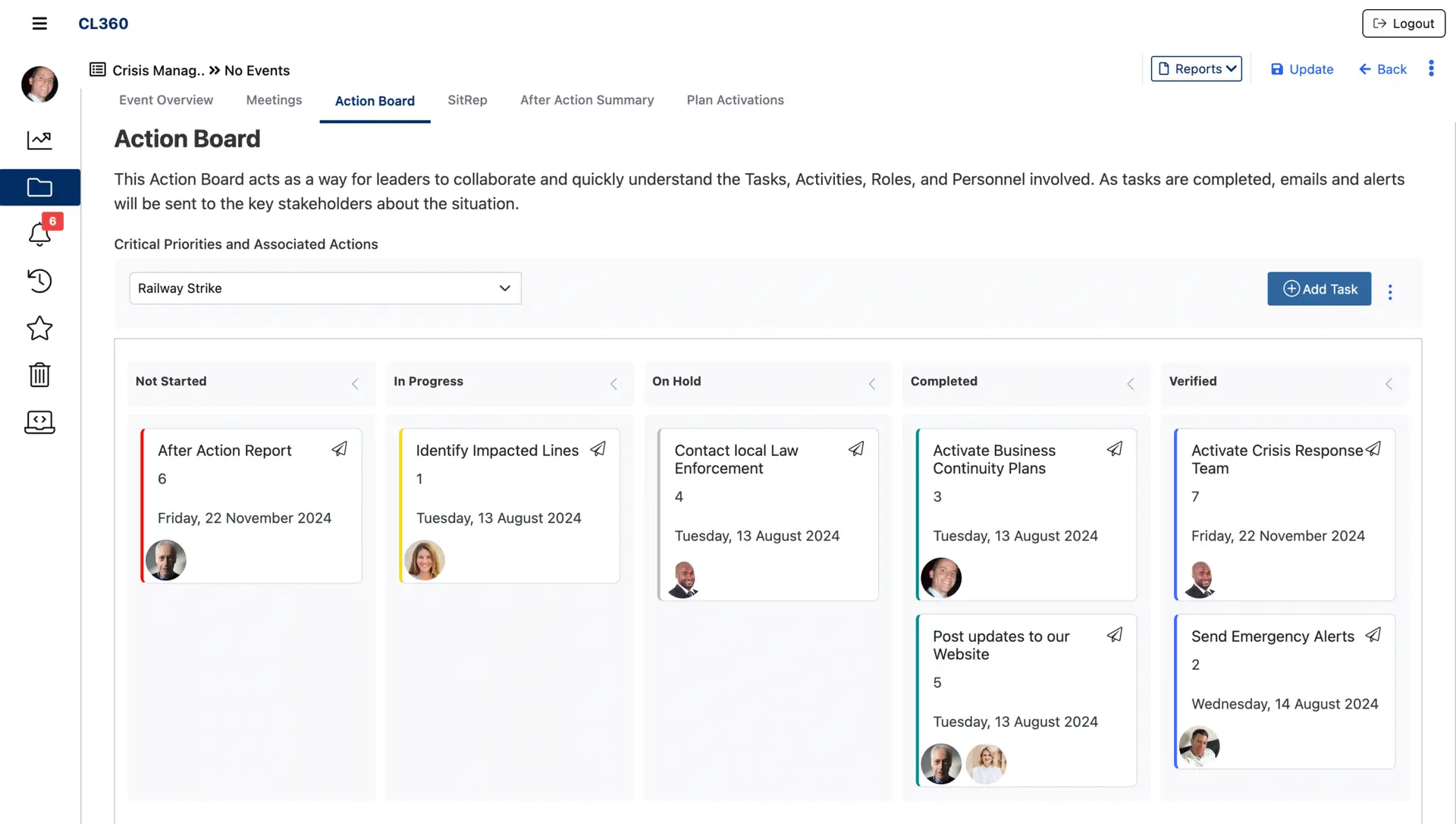
Empower leadership to make quicker decisions with a digital Kanban Board.
Follow configurable swim lanes to understand progress, challenges, and completion activities.
A clear picture that any leader can understand, quickly.
BENEFITS
Fast, Decisive Action
Protect Your Reputation
Real-Time Decisions
Ensure Accountability
Types of Crises Organizations Face
Knowing what kinds of crises your organization might encounter helps you build a more focused crisis management plan. While every industry has its own vulnerabilities, most threats fall into a handful of categories.
Cyberattacks and Technology Failures
Data breaches, ransomware attacks, and system outages can bring operations to a halt within minutes. Responding to a cyber incident typically requires immediate containment, stakeholder notification, and coordinated recovery across IT and communications teams.
Operational Disruptions
Supply chain breakdowns, equipment failures, and workforce shortages all affect your ability to deliver products or services. The ripple effects often extend to customers, partners, and revenue.
Reputational Crises
Negative press, viral social media backlash, or executive misconduct can erode trust faster than almost any other threat. Reputational crises call for rapid, transparent communication to limit long-term damage.
Natural Disasters
Hurricanes, earthquakes, floods, and pandemics create physical and logistical challenges that affect facilities, employees, and entire regions. Natural disasters often trigger both business continuity plans and crisis response protocols at the same time.
Financial Disruptions
Market volatility, fraud, or sudden liquidity issues can threaten organizational stability. Financial crises typically require coordination between leadership, legal, and finance teams to manage both internal and external communications.
Crisis Type | Primary Impact | Key Response Focus |
Cyberattacks and technology failures | Data loss, operational downtime | Containment, notification, IT recovery |
Operational disruptions | Service delivery, revenue | Supply chain coordination, workarounds |
Reputational crises | Brand trust, stakeholder confidence | Transparent communication, media management |
Natural disasters | Facilities, employee safety | Business continuity, safety protocols |
Financial disruptions | Liquidity, market position | Leadership coordination, legal compliance |
FAQ
Solution FAQs
What is Crisis Management?
What are the key functionalities of Crisis Management?
Can we manage our Crisis program how we want to?
What are the benefits of Crisis Management?
What are the challenges of Crisis Management?
Can this link up to other key crisis systems?
Yes, CLDigital 360 can integrate to your EMNS tools, MS Teams, WhatsApp, etc. for additional collaboration capabilities.
GET STARTED
Let's Connect
Discover how our platform can help you achieve better outcomes and you prepare for what’s next in risk and resilience.